HBOT, Mitochondria and Athletic Performance: What the Efrati Research Found, and What a Single Case Study Proved
For athletes, performance is not just about training harder. Recovery, energy production and cellular efficiency all play a major role in how well the body adapts to exercise over time.
One area receiving increasing attention is the role of mitochondria - often called the 'powerhouses' of the cell - and how Hyperbaric Oxygen Therapy (HBOT) may positively influence them.
A 2022 study from Prof. Shai Efrati and colleagues explored exactly this question in middle-aged athletes. Their findings showed HBOT most likely improves endurance performance, aerobic capacity and mitochondrial function in healthy, active adult athletes.
The study, titled "Effects of Hyperbaric Oxygen Therapy on Mitochondrial Respiration and Physical Performance in Middle-Aged Athletes" was a double-blind, randomised, placebo-controlled trial involving healthy master athletes aged 40-50 years.
Participants completed:
40 HBOT sessions over 2 months, 5 sessions per week
2.0 ata for 60 mins
A placebo 'sham' group underwent similar chamber sessions without therapeutic oxygen exposure.
Why Mitochondria Matter for Athletes
Mitochondria are responsible for producing ATP - the energy currency your body uses during exercise, recovery and repair.
The better your mitochondria function:
The more efficiently you produce energy
The better your aerobic endurance
The longer you can sustain effort
The faster you recover between sessions
As athletes age, or as increased stress is put upon them, mitochondrial efficiency can gradually decline, even in highly trained individuals. This can contribute to reduced endurance, slower recovery and diminished training adaptation.
What Did the Researchers Find?
The HBOT group showed significant improvements in several key performance markers compared to the placebo group.
Improved VO2 Max
VO2 Max is one of the most recognised markers of aerobic fitness and endurance capacity. The study demonstrated significant improvements in VO2 Max following HBOT. This signals the athletes were able to utilise oxygen more effectively during exercise.
Improved Anaerobic Threshold
The athletes also improved their anaerobic threshold - the point where the body begins accumulating lactate faster than it can clear it. A higher anaerobic threshold can translate to:
Sustaining harder efforts for longer
Improved endurance performance
Better tolerance to high-intensity training
Enhanced Mitochondrial Function
One of the most interesting findings was what occurred at the cellular level. Using muscle biopsies, the researchers demonstrated improvements in:
Mitochondrial respiration
Mitochondrial oxidative phosphorylation
Mitochondrial mass
In simple terms, the athletes appeared to develop healthier and more efficient cellular energy systems.
How does HBOT create these changes?
HBOT dramatically increases the amount of dissolved oxygen carried in plasma. This temporary oxygen-rich environment triggers adaptive cellular responses. Repeated intermittent oxygen fluctuations stimulate:
Mitochondrial biogenesis
Angiogenesis (new blood vessel formation)
Cellular repair pathways
Improved oxygen utilisation efficiency
The Efrati group often refers to this as the 'hyperoxic-hypoxic paradox' where intermittent high oxygen exposure can stimulate some of the same regenerative pathways typically associated with hypoxia or exercise adaptation.
What Does this Mean For Athletes?
Improved recovery between intense training blocks
Increased endurance performance
Increased aerobic conditioning
Increased cellular energy production
Single Case Study at Hyperbaric Health
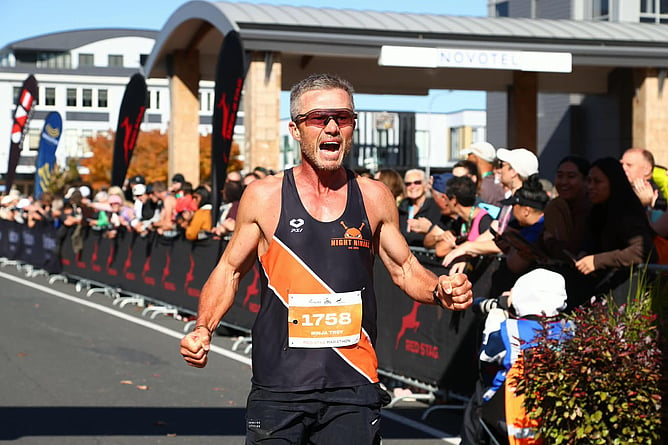
Based on this research, we performed our own single case study on Troy Harold, a masters endurance runner in the 55-59 age bracket.
Troy is an elite athlete in his age bracket. He did not change his normal training regime, the only thing he added was HBOT.
Troy attended his first HBOT session on Wednesday February 11, 2026. He attended a total of 12 HBOT sessions over 10 weeks (approximately 1 session per week) leading up to the Rotorua marathon on Saturday May 2, 2026.
The HBOT sessions mirrored the Efrati group's sessions - 2.0 ata for 60 mins. The only difference was 12 sessions over 10 weeks (approximately 1x per week) as opposed to the Efrati group 5x week x 8 weeks (40 sessions total).
Troy reported that HBOT was significantly assisting him to train longer, faster, and with decreased recovery time.
On race day, Troy ran his personal best time of 2:39:13. He broke the 55-59 masters marathon record, beating the previous record of 2:42:00 set in 1985 by Derek Turnbull. Troy lowered Turnbull's long-standing mark by 2 minutes 47 seconds. He believes HBOT gave him a significant advantage, assisting him in breaking the long-held NZ record.
Final Thoughts
Athletic performance is ultimately about how efficiently the body can create and use energy. The Efrati group's research and our own case study strongly suggest that HBOT helps support this process at the cellular level by improving mitochondrial function and oxygen utilisation.
For athletes looking to optimise recovery, resilience and long-term performance, HBOT is becoming an increasingly interesting area of sports science research.
- Samantha Winters