Hyperbaric Oxygen Therapy Helps Improve VO2Max
For endurance and aerobic athletes, VO2Max is one of the most important indicators of aerobic fitness. It represents the maximum amount of oxygen your body can utilise during intense exercise and it's closely linked to endurance performance.
While training remains the cornerstone of improving VO2Max, research is now showing that Hyperbaric Oxygen Therapy (HBOT) can provide an additional advantage by enhancing the body's ability to utilise oxygen at a cellular level.
Why VO2Max Matters
A higher VO2Max allows athletes to:
Sustain higher exercise intensities for longer
Improve endurance and recovery between training sessions
Delay fatigue during competition
Maximise the benefits of structured training
Elite athletes are constantly looking for legal, evidence-based ways to gain a performance edge, and HBOT is becoming an increasingly recognised recovery and adaptation tool.
How HBOT Improves Performance
During an HBOT session, athletes breath high concentrations of oxygen under increased atmospheric pressure. This dramatically increases the amount of oxygen dissolved directly into the blood plasma, allowing oxygen to reach tissues that may not normally receive optimal oxygen delivery.
Research shows HBOT helps by:
Improving mitochondrial function and energy production
Supporting the formation of new blood vessels (angiogenesis)
Enhancing recovery from high training loads
Reducing inflammation and muscle soreness
Promoting cellular adaptation that improves oxygen utilisation
HBOT enhances training by helping athletes recover better and adapt more effectively to the training they are already doing.
A Real World Example
One athlete who has incorporated HBOT into his training programme is New Zealand masters marathon runner - Troy Harold.
Since 11 February 2006, Troy has completed one HBOT session per week at 2.0 ata for 60 mins as part of his overall training and recovery strategy.
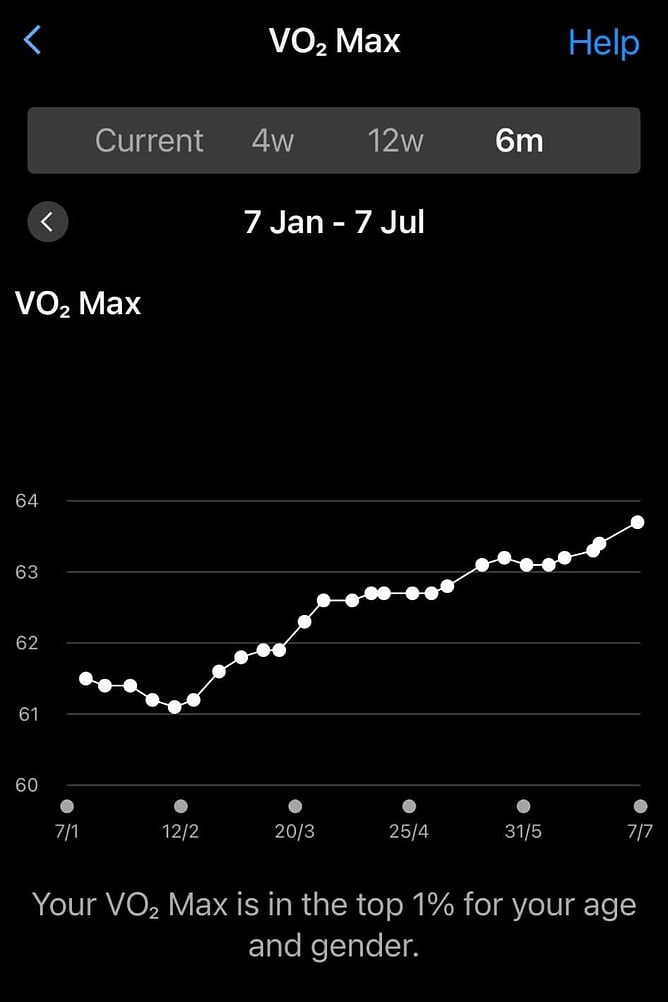
Interestingly, this coincides with the point where his Apple Health VO2Max measurement began a consistent upward trend.
From mid-February onward, his estimated VO2Max increased steadily from just over 61 mL/kg/min to almost 64 mL/kg/min, placing him in the top 1% for his age and gender.
Performance Where it Counts
The improvements weren't limited to wearable data.
On Saturday 2 May, Troy completed the Rotorua Marathon in an outstanding 2:39:13
In doing so, he broke the New Zealand men's 55-59 marathon record by 2 minutes and 47 seconds, surpassing a record that had stood since 1985.
While outstanding training, dedication and consistency were undoubtedly the primary drivers of this achievement, HBOT proved an invaluable training tool leading up to race day.
The Science Continues to Grow
Recent research has demonstrated improvements in mitochondrial respiration and biogenesis, aerobic threshold, and VO2Max in aerobic athletes following the administration of HBOT. (Effects of Hyperbaric Oxygen Therapy on Mitochondrial Respiration and Physical Performance in Middle-Aged Athletes: A Blinded, Randomised Controlled Trail. Efrati et al, 2022).
Scientists believe these benefits may result from repeated periods of hyperoxia triggering adaptive responses that improve how the body produces and utilises energy.
This concept is particularly exciting because performance isn't simply about delivering more oxygen - it's about teaching the body to use oxygen more efficiently.
The Takeaway
When Hyperbaric Oxygen Therapy is combined with a well-designed training programme, quality nutrition, and adequate recovery, it provides another valuable tool to help athletes maximise their potential.
For athletes chasing marginal gains, those small improvements can make all the difference - whether that's setting a personal best, qualifying for a major event, or, in Troy Harold's case, rewriting the New Zealand record books.
At Hyperbaric Health we use evidence-informed HBOT protocols tailored to each individual. Whether you're an elite athlete, a weekend warrior, or preparing for your next endurance event, HBOT can help you recover more effectively so you can continue training at your best.
- Samantha Winters