Can Hyperbaric Oxygen Help Protect Against Pulmonary Fibrosis? What the Research Shows
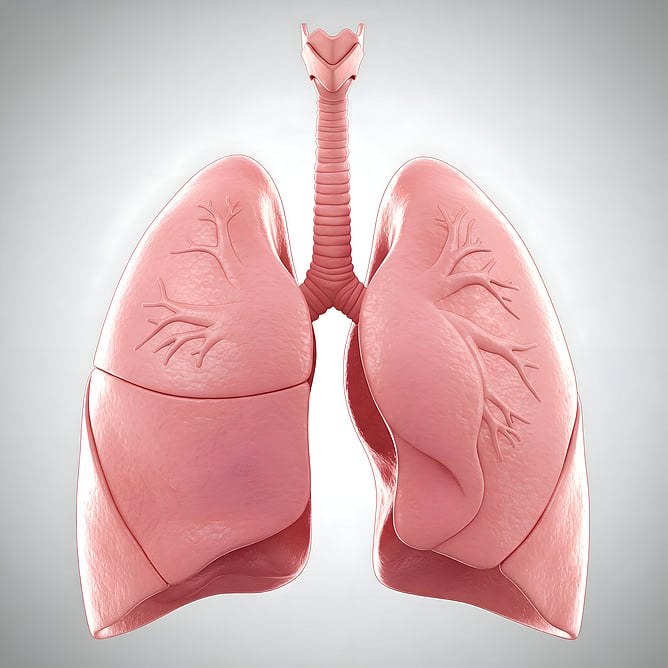
Pulmonary fibrosis is a serious condition in which lung tissue becomes progressively scarred and stiff. As fibrosis develops, excessive connective tissue and collagen accumulate within the lungs, disrupting the normal architecture of the tissue and making it increasingly difficult for oxygen to move efficiently into the bloodstream.
While current medical treatments can help slow the progression of some forms of pulmonary fibrosis, researchers continue to investigate new approaches that may influence the underlying biological processes involved in fibrosis.
One particularly interesting area of research is Hyperbaric Oxygen Therapy (HBOT).
A 2021 study published in Frontiers in Molecular Biosciences investigated whether hyperbaric oxygen could reduce pulmonary fibrosis in mice. The study, titled Hyperbaric Oxygen Ameliorates Bleomycin-Induced Pulmonary Fibrosis in Mice, produced some intriguing findings about how increased oxygen availability under pressure may influence the fibrotic process.
What is pulmonary fibrosis?
Pulmonary fibrosis involves abnormal deposition and remodelling of the extracellular matrix - the structural material that surrounds cells.
One of the key components of this process is collagen.
As excessive collagen accumulates, the normally delicate lung tissue becomes thicker and less flexible. This can interfere with normal gas exchange and, in progressive disease, lead to respiratory impairment.
At a cellular level, fibroblasts are particularly important. These cells are involved in normal tissue repair, but when excessively activated they can transform into myofibroblasts and produce large amounts of extracellular matrix.
This raises an important question: Could changing the oxygen environment influence the behaviour of these cells?
The mouse study
Researchers created a pulmonary fibrosis model by administering bleomycin directly into the trachea of mice. Bleomycin is commonly used experimentally to produce lung injury and fibrosis in laboratory animals.
The mice were then exposed to repetitive hyperbaric oxygen treatments. Importantly, HBOT was started seven days after the bleomycin challenge, rather than being used only as a preventative intervention. The animals received daily HBOT through day 20, after which their lung tissue was examined.
The researchers assessed several indicators of fibrosis, including:
The amount of fibrotic tissue in the lungs
Collagen deposition
Ashcroft fibrosis scores
Hydroxyproline content, an important marker of collagen
Fibroblast activation and extracellular matrix production
What did they find?
The findings were striking.
Compared with mice that developed pulmonary fibrosis following the bleomycin challenge, mice receiving repetitive HBOT sessions showed less fibrotic tissue and less collagen deposition in their lungs.
The researchers also found a significant reduction in the Ashcroft fibrosis score in the HBOT-treated animals.
Hydroxyproline levels were also significantly lower, providing another indication that collagen accumulation had been reduced.
In other words, the lungs of the HBOT-treated mice demonstrated less of the structural change associated with fibrosis.
But the study went further than simply observing a change in lung tissue.
The cellular mechanism is particularly interesting
The researchers also investigated what might be happening at a cellular level.
A major pathway involved in fibrosis is transforming growth factor beta (TGF-b).
TGF-b plays an important role in activating fibroblasts and promoting the production of extracellular matrix. Excessive activation of this pathway is associated with fibrotic tissue formation.
The researchers found that exposure to hyperbaric oxygen could partially reverse TGF-b-induced fibroblast activation in vitro.
They also identified a possible connection with HIF-1a, or hypoxia-inducible factor - 1 alpha.
HIF-1a is a major cellular signalling molecule involved in the response to low oxygen conditions. The researchers found that HBOT reduced TGF-b-induced HIF-1a expression.
This is significant because pulmonary fibrosis can create areas of altered oxygen availability within tissue, while hypoxia and HIF signalling can contribute to processes involved in fibrosis.
The authors therefore proposed that increasing tissue oxygen availability through HBOT may influence the interaction between hypoxia, HIF-1a and TGF-b-driven fibroblast activation.
Why does pressure matter?
HBOT is not simply about breathing more oxygen. The combination of oxygen and increased atmospheric pressure is what makes hyperbaric oxygen different from breathing oxygen at normal atmospheric pressure.
Increasing pressure substantially increases the amount of oxygen that can dissolve directly into the blood plasma. This increases oxygen diffusion into tissues beyond what can be achieved through haemoglobin-bound oxygen alone.
For tissues affected by altered circulation, inflammation or abnormal cell metabolism, this change in oxygen availability influences cellular signalling as well as oxygen delivery.
Oxygen can be both a treatment and a signal
Oxygen isn't simply 'fuel'. Changes is oxygen availability act as a biological signal.
Hyperbaric oxygen creates a temporary, highly oxygenated environment. The body then responds to that change through a number of cellular pathways.
What does the temporary increase in oxygen availability tell the cells to do?
In this study, the answer involves pathways associated with fibroblast activation, extracellular matrix production and hypoxia signalling.
What does this mean for the treatment of pulmonary fibrosis?
This study was conducted in mice using a bleomycin-induced model of pulmonary fibrosis. Results from animal models cannot automatically translate into clinical outcomes in humans. However, the findings provide an important proof of concept that hyperbaric oxygen can influence biological processes associated with pulmonary fibrosis.
Interestingly, subsequent research has continued investigating the relationship between HBOT, hypoxia and pulmonary fibrosis. A 2023 study using integrated molecular and clinical datasets identified pathways including epithelial-to-mesenchymal transition and glycolysis that may be influenced by hypoxia and potentially modified by HBOT.
The bigger picture
Perhaps the most interesting message from this research is that HBOT may have effects that go beyond simply increasing oxygen saturation.
The study suggests that oxygen under pressure can influence cellular behaviour - including pathways involved in tissue repair, fibroblast activation and extracellular matrix production.
For pulmonary fibrosis, where abnormal tissue repair and excessive extracellular matrix deposition are central features of the disease, this is an area that warrants further investigation.
The research is still developing, and larger human clinical studies are needed before HBOT can be considered an established treatment for pulmonary fibrosis.
And that is what makes hyperbaric oxygen research so interesting: sometimes the most important effect of HBOT may not simply be the oxygen itself, but what the temporary change in oxygen availability signals the body to do.
- Samantha Winters