HBOT for Severe Traumatic Limb Injuries: What Does the 2026 Evidence Tell Us?
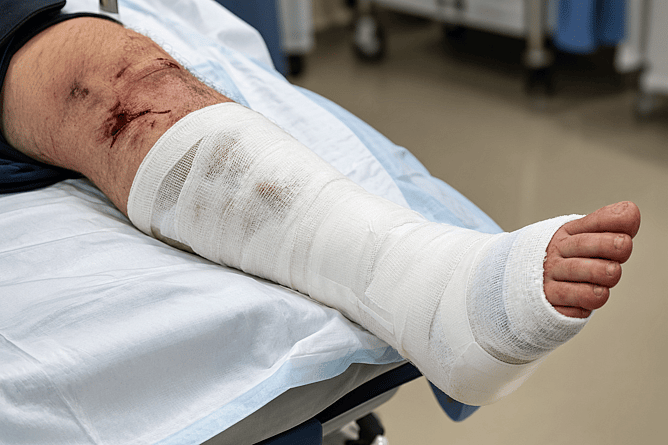
Severe traumatic limb injuries can be some of the most difficult wounds to manage.
Crust injuries, extensive soft-tissue trauma and complex limb injuries can compromise blood flow and oxygen delivery to damaged tissue. This can increase the risk of tissue necrosis, infection, delayed wound healing and further surgical intervention.
A new systematic review and meta-analysis published in Medicina in August 2026 has examined the evidence for using Hyperbaric Oxygen Therapy (HBOT) as an adjunct to standard treatment for severe traumatic limb injuries.
The findings are encouraging - particularly in relation to wound infection and tissue necrosis.
What did the 2026 meta-analysis look at?
The researches searched MEDLINE/PubMed, Embase and the Cochrane Library for studies available up to March 2026.
Seven studies were included. 3 randomised controlled trials, 4 observational studies.
The researchers looked at several clinically important outcomes, including complete wound healing, time to healing, wound infection, wound necrosis and length of hospital stay.
HBOT was used an an adjunctive treatment alongside conventional trauma care.
The most striking findings: infection and tissue necrosis
The meta-analysis found that patients receiving HBOT had a significantly lower rate of wound infection. The pooled analysis found an odds ratio of 0.31, meaning the odds of wound infection were approximately 69% lower in the HBOT group than in the control group.
The analysis also found a significant reduction in wound necrosis, with an odds ratio of 0.23 - approximately a 77% lower odds of necrosis in the HBOT group.
These are clinically important findings because, in a severely traumatised limb, preserving viable tissue and reducing infection can be critical to the subsequent healing process.
A major consequence of severe trauma is compromised microcirculation. Even when the major blood vessels remain open, the tiny vessels supplying injured tissue can be damaged or compressed by swelling and inflammation. This can leave areas of tissue relatively hypoxic - receiving insufficient oxygen to meet the demands of repair.
HBOT works through two complementary mechanisms: increasing the amount of oxygen available and increasing the pressure driving oxygen into tissues.
Breathing oxygen under increased atmospheric pressure dramatically increases the amount of oxygen dissolved in the plasma. This allows oxygen to reach areas where normal red-blood-cell-dependent delivery may be compromised.
HBOT also produces physiological effects beyond simply increasing oxygen availability, including reducing tissue oedema, supporting angiogenesis and influencing inflammatory and cellular signalling pathways.
In the setting of severe trauma, these mechanisms help create a more favourable environment for tissue survival and repair.
What about complete wound healing?
Complete wound healing was the primary outcome specified for the review. However, only one small randomised trial reported this outcome in a sufficiently comparable way to be assessed. Although the trial favoured HBOT, the researchers considered the certainty of the evidence very low because of the small amount of data and methodological limitations.
The meta-analysis therefore concluded that there is currently insufficient evidence to definitively say that HBOT increases the likelihood of complete wound healing in severe traumatic limb injuries. It does not mean that HBOT was shown to be ineffective, more research is needed.
Did HBOT make wounds heal faster?
Interestingly, the pooled analysis did not demonstrate a statistically significant difference in the time to wound healing.
The mean difference was -1.44 days, with a 95% confidence interval ranging from -6.70 to 3.82 days.
There was also no clear difference in length of hospital stay.
How does this fit with earlier research?
The 2026 meta-analysis builds on earlier evidence. A 2024 systematic review of HBOT in severe lower-limb soft-tissue injuries identified seven studies involving 229 patients. That review reported encouraging findings including improved wound healing, reduced tissue necrosis, reduced infection and fewer additional surgical interventions when HBOT was added to conventional treatment.
Where does HBOT fit?
"How do we give the surviving tissue the best possible environment in which to recover?" - this is where HBOT may have an important role.
Oxygen-and pressure-matters.
It's the combination of oxygen concentration and increased pressure. Increasing pressure substantially increases the amount of oxygen that can be dissolved directly into the plasma. This creates a greater oxygen gradient between the circulation and tissues, helping oxygen move into areas where tissue oxygenation may be compromised.
For severely injured tissue, where microvascular circulation may be impaired by trauma and swelling, this increased oxygen availability is particularly relevant.
Reference:
Choe, KK, Kim Y, Yon DK, Kang WS. Adjunctive Hyperbaric Oxygen Therapy for Severe Traumatic Limb Injuries: A Systematic Review and Meta-Analysis. Medicinal 2026; 62(8):1589
- Samantha Winters